Geometric Pattern Design Elements: A Strategic Asset for Modern Branding
In the crowded digital landscape, visual distinctiveness is not merely an aesthetic choice; it is a strategic imperative. Geometric Pattern Design Elements serve as a foundational tool for professionals seeking to establish order, convey stability, and create memorable brand identities. Whether you are a small business owner refining your packaging, a marketer designing a campaign, or an educator creating instructional materials, the application of structured design can significantly influence how your message is received and retained.
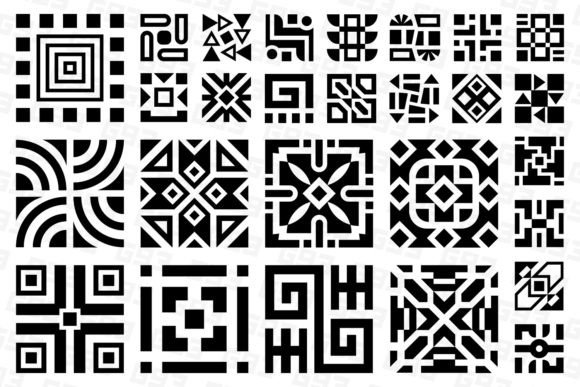
The collection of abstract mosaic black and white ornamental design elements offers more than just decorative flair. It provides a versatile toolkit that bridges the gap between rigid structure and creative expression. By integrating these patterns into your workflow, you move beyond random decoration toward intentional communication. This approach allows you to align visual output with broader organizational goals, ensuring that every element on a page contributes to a cohesive narrative.
The Strategic Value of Structured Visuals
Why should decision-makers prioritize geometric patterns in their design strategy? The answer lies in cognitive psychology and visual hierarchy. Geometric shapes—circles, squares, triangles, and complex mosaics—are processed by the human brain faster than organic forms. They signal precision, logic, and reliability. When used effectively, Geometric Pattern Design Elements can guide the viewer's eye, segment information, and reinforce brand values without the need for excessive text.
For entrepreneurs and freelancers, this means reducing the cognitive load on your audience. A well-placed pattern can act as a visual anchor, separating sections of a report, highlighting key data points in a presentation, or adding texture to a website background without overwhelming the content. In the context of branding, these elements help define a unique visual language. A consistent use of specific geometric motifs creates a recognizable identity that persists across different mediums, from business cards to social media graphics.
Enhancing Planning and Operations
Beyond aesthetics, the adoption of high-quality design assets streamlines operations. Consider the time saved when working with vector-based Geometric Pattern Design Elements. Unlike raster images that pixelate upon scaling, vector files allow for infinite resizing without loss of quality. This flexibility is crucial for businesses that operate across diverse platforms, requiring everything from tiny mobile icons to large-scale billboards.
The inclusion of multiple file formats in this collection addresses various stages of the production pipeline:
- JPG (High Resolution): Ideal for final outputs where transparency is not required, such as printed brochures or web banners. With 300 ppi density, these files ensure crisp reproduction in professional print environments.
- PNG (Transparent Background): Essential for overlaying designs onto existing layouts. This format allows marketers to integrate patterns seamlessly into photographs, product shots, or UI designs without manual masking.
- SVG (Vector Graphics): Perfect for responsive web design. SVGs scale perfectly on any screen resolution, ensuring a sharp user experience on everything from smartphones to 4K monitors.
- AI and EPS (Adobe Illustrator & Vector): These editable source files empower designers to modify colors, adjust stroke widths, or combine elements to create custom variations. This level of control supports iterative design processes and long-term asset management.
Intentional Application Over Random Decoration
A common pitfall in design is the indiscriminate use of patterns. Adding a geometric background to every slide or webpage does not automatically elevate the quality of the work. Instead, Geometric Pattern Design Elements must be deployed with clear intent. The goal is to support the content, not compete with it.
When planning a project, ask yourself what role the pattern should play. Is it meant to frame the content? To create a sense of depth? Or perhaps to evoke a specific mood, such as the modern minimalism often associated with black and white monochromatic schemes? The abstract mosaic style mentioned in this collection offers a sophisticated alternative to simple grids. Its complexity allows for subtle texture that adds character without demanding attention.
Consider the following scenarios for strategic application:
- Brand Positioning: Use bold, repetitive geometric motifs to communicate innovation and forward-thinking. This works particularly well for tech startups or consulting firms looking to appear structured and reliable.
- Customer Experience: In digital interfaces, subtle patterns can reduce visual fatigue. Using low-contrast mosaic elements behind text blocks can improve readability and create a more immersive environment.
- Educational Materials: For educators and publishers, geometric patterns can organize complex information. Distinct borders or section dividers help students navigate dense material, making learning more accessible and engaging.
Navigating Risks and Limitations
While powerful, relying on design elements without a clear strategy carries risks. Overuse can lead to visual clutter, causing the audience to miss the core message. If a pattern is too busy or has high contrast against the text, it can render content unreadable. Furthermore, using generic templates without customization can make a brand look indistinguishable from competitors.
To mitigate these risks, always test your designs in the intended context. Check how the black and white patterns interact with your primary color palette. Ensure that the transparency in PNG files blends correctly with your background layers. Remember that the most effective design is often the one that feels invisible—it enhances the message rather than drawing attention to itself.
Maximizing Long-Term Value and Versatility
The true value of a design asset library lies in its longevity and adaptability. A collection containing 27 included variations of Geometric Pattern Design Elements provides a robust starting point for long-term projects. Instead of sourcing new graphics for every campaign, you have a consistent set of tools that can be repurposed and recombined.
This versatility extends to cross-platform consistency. A logo designed with AI vectors can be easily adapted into a favicon (SVG), a print flyer (JPG), and a transparent overlay for video content (PNG). This unified approach reduces friction in the creative process and ensures that your brand maintains a professional standard across all touchpoints.
For creators and hobbyists, the availability of editable vector files (AI and EPS) opens doors to experimentation. You are not limited to the pre-set arrangements. You can deconstruct the mosaic elements, alter the geometry, and create entirely new compositions that reflect your unique vision. This freedom fosters creativity while maintaining the structural integrity provided by the original design principles.
Practical Tips for Implementation
To get the most out of this collection, adopt a systematic approach to integration:
- Start with the Goal: Define the emotional response you want to elicit before selecting a pattern. Do you want calmness, energy, or sophistication?
- Maintain Consistency: Stick to a defined set of patterns throughout a single project. Mixing too many different styles can dilute the impact of your message.
- Leverage Transparency: Use the PNG versions to layer patterns over gradients or images, creating depth and dimensionality that flat JPGs cannot achieve.
- Scale with Precision: Utilize the SVG and EPS files to ensure your designs remain sharp regardless of the output size. Never compromise resolution for convenience.
Ultimately, the selection of design elements is a reflection of your commitment to quality. By choosing a comprehensive set of Geometric Pattern Design Elements, you are investing in a resource that supports clarity, efficiency, and professional growth. Whether you are building a brand from scratch or refreshing an existing identity, these tools provide the structural foundation necessary to stand out in a noisy marketplace.
As you move forward with your projects, remember that good design is about making better decisions. It is about understanding the relationship between form and function. The abstract mosaic black and white ornamental design elements offer a timeless aesthetic that transcends fleeting trends. By applying them thoughtfully, you ensure that your work remains relevant, effective, and impactful for years to come.
The collection includes 27 high-resolution images, each available in multiple formats to suit your specific technical requirements. From the initial sketch phase to the final delivery, having access to both raster and vector options ensures that you are never constrained by technical limitations. This flexibility empowers you to focus on the creative strategy, knowing that the execution will meet the highest standards of quality.
In conclusion, the strategic use of geometric patterns transforms ordinary designs into compelling narratives. It is a methodical approach that respects the intelligence of the audience while providing the visual cues necessary for engagement. As you explore the possibilities within this collection, let your goals guide your choices. Use these elements to build, to inform, and to inspire. The result will be work that not only looks professional but performs effectively in achieving your desired outcomes.